
 Jessica O'Connor
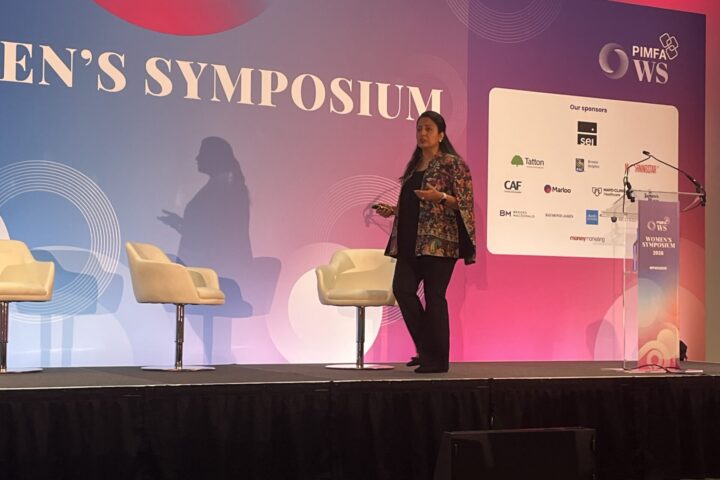
Senior financial services figures speaking at the Personal Investment Management & Financial Advice Association (PIMFA) Women’s Symposium 2026 said leadership increasingly requires authenticity and adaptability, as expectations around workplace culture continue to evolve.
The panel discussion featured Liz Field, chief executive of PIMFA, Hannah Gurga, director general of the Association of British Insurers (ABI), Lisa Kidd Hunt, managing director and head of international services at Charles Schwab UK, and Claire Limon, managing director of 2 Plan Wealth Management Limited.
Opening the discussion, Limon described leadership as “enabling, supporting and influencing individuals to achieve a common outcome or goal”, adding that balancing long-term strategy with remaining connected to teams was one of the biggest challenges leaders face.
She said: “It’s about being real and approachable.
“But then even more difficult when you’ve landed it is then taking off again and making sure you’re keeping that full beam look on the future direction you’re going.”
Kidd Hunt reflected on leading teams through crises, including the aftermath of 9/11 while managing teams across Washington DC, and said emotional intelligence becomes particularly important during periods of uncertainty.
Kidd Hunt added: “As a leader, especially in a time of crisis, you need to often make very quick decisions, often unpopular decisions.
“And emotional intelligence […] is probably one of the biggest elements that you draw from in a time of crisis.”
Gurga said leadership within a trade body environment relied heavily on influence rather than direct control, particularly when representing a broad range of member firms with differing priorities.
She said: “Your currency as a leader is about influence. It’s about taking that long-term perspective.”
The panel also discussed how leadership expectations have shifted since the pandemic, with greater emphasis placed on openness, flexibility and understanding employees’ personal circumstances.
Kidd Hunt said the shift towards hybrid and remote working environments had “humanised all of us in a way”, adding that it had created deeper relationships between leaders and employees.
Gurga added that modern leadership increasingly involves balancing transparency with maintaining confidence and stability for teams.
“I think as a leader, everything you do is being observed all the time,” she said.
“The signals you send might not be what you’re intending.”
The discussion also explored authenticity in leadership, with speakers highlighting the importance of consistency, context and emotional intelligence when making difficult decisions.
Kidd Hunt said: “One of the most important things to do as a leader is to provide context.
“Sometimes we rush to the decision […] but the context setting, bringing people along with you in that decision, are probably equally if not more important than the ultimate decision.”
Limon added: “Be authentic, be yourself, and believe in your own moral compass.”