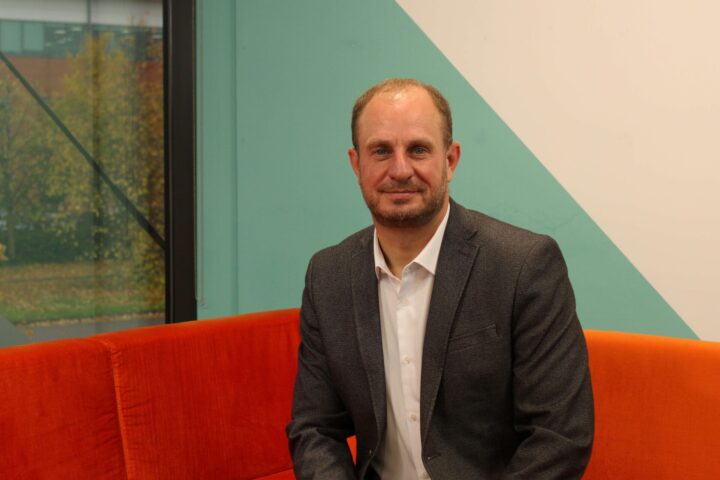

 Matt Monette
For many UK businesses, redundancies over the past year were positioned as a necessary response to economic pressure. Rising costs, slowing growth, and ongoing uncertainty forced leaders to make fast, often painful decisions in the name of financial discipline.
Yet, as the dust settles, a clear picture is emerging, and those decisions are being widely regretted. New international research commissioned by LHH found that nine in 10 UK companies now regret the redundancies they made over the past year. Nearly three quarters failed to break even financially, and many are already grappling with the hidden consequences – from lost institutional knowledge and delayed projects to lower morale and, in many cases, rehiring for the same roles they previously eliminated.
This pattern is not unique to the UK, but the pace and regularity with which British businesses have fallen into a redundancy regret cycle is particularly striking.
The anatomy of the regret cycle
The cycle tends to follow a familiar path. Economic pressure builds and leadership teams look for rapid, visible cost savings. Headcount, often the largest operational expense, becomes the most immediate lever. Redundancies are implemented quickly, sometimes driven by narrow role definitions or assumptions about automation and AI replacing human work.
Initially, the decision appears effective – costs fall, budgets look healthier, and stakeholders see decisive action. However, roll on a few months and the operational reality starts to surface.
Projects slow when the people who understand them best are no longer there. Institutional knowledge disappears, often without skills being transferred. Remaining employees absorb additional responsibilities until strain becomes unavoidable. Teams experience burnout, productivity drops, and confidence across the organisation erodes. Customer relationships also suffer as continuity is lost.
At this point, many organisations begin hiring again – often for the same roles that were cut.
Why layoffs deliver short‑term wins but long‑term damage
What makes this cycle particularly costly is how predictable it has become. HR leaders regularly report seeing these outcomes play out, yet many struggle to prevent them. Decisions are often made under intense pressure, with limited visibility and very short timelines.
When speed becomes the overriding priority, organisations default to what is easiest to measure rather than what is most valuable. Job titles and salary bands stand in for capability. Skills, experience, and adaptability are overlooked. The long‑term cost of disruption rarely features prominently in decision‑making.
Redundancy programmes are also frequently judged against narrow success measures. Short-term cost reduction becomes the primary yardstick, even when the longer‑term operational and financial impact tells a different story. Financial models may improve on paper, while delivery, resilience and morale deteriorate in practice.
The misplaced confidence in automation
There is also a growing tendency to overestimate how quickly technology can replace people. AI will undoubtedly reshape the way work is done, but many organisations have discovered that removing roles prematurely creates gaps that technology alone cannot fill.
Experience, contextual knowledge and judgment are difficult to automate. When these disappear, teams often have little choice but to rehire, usually at higher cost, to restore lost capability. This helps explain why so many companies end up rebuilding the very functions they believed could be eliminated.
What businesses are doing differently to avoid repeat mistakes
However, there are alternatives to repeating this cycle. The organisations starting to avoid regret are those investing in better workforce visibility before economic pressure forces decisions. Rather than leading with cuts, they focus on understanding the skills, experience and mobility that already exist within their workforce.
With clear insight into who can do what, beyond their current job title, redeployment and reskilling become realistic options. Roles can be reshaped, work redistributed and talent retained at a fraction of the cost of replacement. Importantly, this approach preserves institutional knowledge and maintains trust at a time when both are in short supply.
Why this matters for UK and global employers
This shift is especially relevant for UK companies operating internationally. Global employers often face additional complexity across contracts, compliance and payroll, which can push leaders towards blunt workforce decisions.
When those complexities are well managed, international mobility and internal redeployment become powerful tools rather than barriers. Talent can be retained and repositioned across markets instead of removed and later replaced.
Ending the cycle for good
Ending the redundancy regret cycle means making better‑informed ones. It means recognising that talent is not static, and that cutting capability often creates bigger problems than it solves.
In a labour market defined by uncertainty, resilience comes from adaptability rather than repeated contraction. Businesses that succeed will be those that understand their workforce deeply enough to evolve without dismantling their foundations.
UK organisations do not need to stop making tough choices, but they do need to stop making the same expensive mistakes, and paying for them twice.
By Matt Monette is country lead at Deel