 Marvin Onumonu
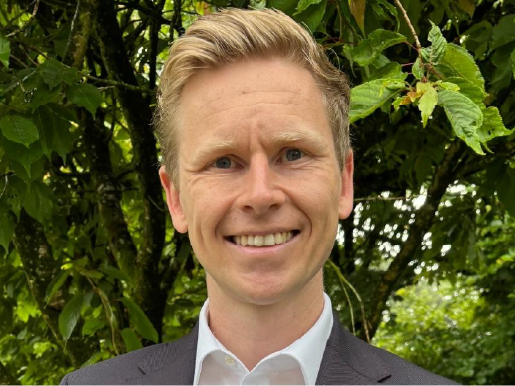
Workplace Journal spoke with Max Gist, head of business development at People’s Pension, about how the pensions market is evolving, what accelerating consolidation means for advisers and employers, and how providers can better support members’ retirement outcomes.
How is the DC and workplace pensions market evolving from an adviser and distribution perspective?
When I think back to the start of my career, when auto-enrolment was just kicking off, a lot of the focus over the last 10 years was simply on establishing schemes and infrastructure. It felt like a very supporting role: getting the admin set up, putting the scheme in place, sorting governance – essentially helping employers do what they had to do, and getting members enrolled into “something.”
Now, the market has moved on from that. In the last few years, it has really shifted towards supporting better member outcomes. If you look at legislation and what providers are doing, it’s all centred on optimising outcomes for members wherever possible.
For me, there are three main drivers: technology is accelerating change faster than ever; there’s a much stronger focus on retirement itself rather than just accumulation; and there’s a more holistic approach to pension saving that considers the wider financial wellbeing of the member, not just the pension pot in isolation.
What shifts have you observed in adviser expectations of providers, especially as consolidation accelerates?
From what I’m seeing in the provider world, consultants and advisers are now looking much more for value and for conviction in what a provider is doing for members. That increasingly means a strong, well-governed default investment strategy that can deliver consistent long-term outcomes for the majority of savers.
They want to understand what the product actually delivers, whether it’s genuinely optimising outcomes, and how well it can be tailored to the specific needs of their clients. Rather than just buying something off the shelf, they’re increasingly asking for client-focused solutions that reflect the nuances of each scheme.
As the regulatory push from own trust to master trust gathers pace, the consolidation exercises we’re seeing are becoming more complex. The “easy” moves have largely happened; now we’re dealing with schemes that have guaranteed minimum pensions (GMPs), with-profits funds and various protections. That raises expectations on providers to come up with more bespoke, thoughtful solutions and to help advisers navigate unresolved areas – for example, how you deal with GMP underpins or with‑profits when you consolidate.
Advisers also expect a broader choice of solutions, especially for smaller or more complex trusts that may fall below the minimums of some traditional commercial providers.
How are advisers and employee benefit consultants (EBCs) adapting their approach as the focus moves from accumulation to member outcomes and retirement support?
Advisers and EBCs are definitely having more holistic conversations than they did in the early days of auto-enrolment. Back then, the need was quite basic: “I need a pension scheme; help me get through auto‑enrolment.” Price often dominated those discussions. Now, the conversations are about the broader client objective – what the employer is trying to achieve, what issues their members are facing, and what sort of outcomes they want at retirement.
As a result, we’re seeing much bigger, more involved exercises. Advisers are looking across the whole journey, not just accumulation, and thinking about the support, guidance and structures members will need right through to and beyond retirement. That naturally leads them to providers who can offer more bespoke approaches, tailored to each client and membership profile, rather than a one-size-fits-all solution.
What are the key challenges advisers face in engaging members and supporting better retirement outcomes?
One major challenge is the sheer number and complexity of solutions in the market, particularly as consolidation pressure increases. As we go further down the funnel, more complicated cases come up – small own trusts, additional voluntary contributions (AVC) arrangements, GMPs, with-profits benefits – and each of these can require bespoke solutions. Another challenge is helping members make good decisions at retirement.
The reality is that you or I could go online tomorrow, type “what should I do with my pension” into Google, and get what is essentially unregulated financial advice or opinion for free. As an industry, we worry a lot about the precise line between guidance and advice, but from a member’s point of view, that line is not always visible.
At the same time, we often expect members, almost overnight, to become investment experts, modelling experts and life expectancy experts the moment they reach retirement: deciding on drawdown levels, investment choices, tax-free cash and the potential role of annuities. That’s a big ask, and it can lead to poor decisions.
Underpinning all of this is engagement: as an industry we’ve only scratched the surface in terms of creating a real emotional connection with pensions, and without that emotional tie, it’s hard to get members to engage early and meaningfully.
Your research highlights demand for better digital tools and improved data – where do you see the biggest gaps today?
I see biggest gaps right at the start of the journey and then again at the member-facing end. At the start, I still find it amazing that, with the technology we have today, many employers are extracting data from payroll, copying and pasting it into different formats and then uploading it to providers. That manual handling introduces errors, delays and security risks.
Our response has been to connect payroll and pension systems directly via API, at scale, so that over a third of our clients now have direct integration with us. That makes the movement of money and data faster, more accurate and more secure.
At the member end, there’s a gap in personalised, ongoing support that helps people understand and manage their wider financial lives alongside their pension. That’s why we’ve partnered with Nudge, integrating financial wellbeing tools, education and budgeting support into our app and offering it free to over seven million members. The data and digital capabilities exist, but as a market we still have work to do to fully join them up and use them to reduce friction and give members the tailored help they need.
How can providers and advisers work together to enhance retirement decision-making for members?
We have to treat this as a shared challenge across the industry. At People’s Pension we recently ran a thought leadership event in Westminster, based on 10 years of member behaviour research – “New Choices, Big Decisions 10 years on” – where we’ve followed members through their retirement journeys. Importantly, we invited not just partners but what you might call competitors or peers as well, because issues like value for money, consolidation and retirement guidance affect the whole market.
Providers and advisers need to work together to lobby for the right guidance frameworks, protections and regulatory clarity, especially around where guidance ends and advice begins. In practical terms, collaboration should focus on designing and implementing structures that lead members towards good, acceptable outcomes – for example, through guided income solutions and default decumulation pathways. Providers can build those default journeys, with flexibility baked in, while advisers ensure they align with specific client objectives and help communicate them to members in a way that supports better decision-making.
To what extent do advisers feel the current DC system is fit for the future, and what are their main concerns?
My sense is that advisers recognise the progress we’ve made but also see some significant gaps. Auto-enrolment has been hugely successful in getting people saving, and the market is clearly moving towards more holistic, whole-of-life solutions that cover both accumulation and decumulation.
However, advisers are rightly concerned about unresolved technical and regulatory issues, particularly around consolidation where schemes have GMP underpins, with‑profits funds or other legacy protections. There isn’t always clear, practical guidance on how to deal with those in a way that is fair to members and workable for employers.
There’s also concern about the environment members are operating in: the ease of accessing unregulated online opinions, the complexity of retirement decisions and the limited engagement many people have with their pensions until very late in the journey. So I would say the direction of travel is positive, but there’s still a lot to do before advisers would be fully confident that the DC system is completely fit for the future.
What innovations or changes would you like to see in the market to better support advisers, employers, and members?
There are three areas I’m particularly passionate about. First, I’d like to see much wider adoption of genuine, end‑to‑end digital connectivity between payroll and pension providers, so that data and contributions can flow automatically and accurately without manual intervention. We’ve already done that at scale with direct API integrations, and I think that kind of approach should become the norm across the market. Second, I’m very excited about guided income solutions in retirement.
We’re bringing out a solution that moves members into target date funds as they approach retirement, manages their income in a sustainable way up to a target age – 75 in our case – and then provides them with a personalised annuity quote. That takes the investment burden off the member while still giving flexibility, and it offers a clear default journey rather than leaving people to navigate everything themselves.
Third, I think the market needs to do much more around financial wellbeing and genuine member engagement. Our partnership with Nudge, delivered free to our membership, is one example, but equally important is how we involve trustees and create that sense of belonging. Recently, our trustees invited members to submit questions directly, received over 2,000, and then recorded 22 videos answering them, supported by a new website and YouTube channel.
That sort of direct, personal engagement helps build an emotional connection to the pension, and I’d like to see more of that kind of innovation across the industry.