
One in five (22%) employers in the UK have no clear objectives for their employee benefits, according to the CIPD’s Reward survey: Focus on employee benefits 2026, supported by Everywhen.
Most employers (77%) linked their benefits to at least one objective, mainly aimed at retaining staff (44%) and supporting engagement (37%).
Fewer than a third (31%) linked benefits to productivity or business performance.
The research also found some employers were not reviewing or evaluating their benefits.
Among those with objectives, 15% did not review their benefits to check if they were working.
Of those that did review, only 33% said their benefits fully met objectives.
Flexible working was seen as the most effective benefit for meeting objectives, with 75% of organisations that provide personal and family benefits saying so.
Despite this, only 40% of organisations offered flexible working, showing a gap between what works and what is offered.
Previous CIPD research showed money worries can affect employee performance, while health benefits could help staff stay in work and reduce absences.
Charles Cotton, senior reward and benefits adviser at the CIPD, said: “Organisations invest significant time, money, and energy into employee benefits to boost performance, wellbeing, and engagement.
“So, it’s worrying that one in five don’t actually know what they want their benefits to achieve.
“That means a sizeable chunk of spending risks lacking clear direction or measurable impact.”
Cotton added: “What turns benefits from a cost into a genuine strategic asset is having clear objectives that are regularly reviewed.
“Employers should be acting on employee feedback, or using data such as turnover and team performance, and tracking progress against defined success measures.
“Without this discipline, employers are fumbling in the dark when it comes to knowing if their benefits are truly delivering for both the business and its people.”
Iain Laws, CEO – health & benefits, Everywhen, said: “Employee benefits are no longer peripheral to the employment deal – they are a central lever for shaping culture, strengthening resilience and enabling people to thrive in an environment where expectations are evolving rapidly.
“Organisations with a coherent wellbeing strategy consistently deliver more meaningful benefits, and that adds real value to both their employees and their company. A workforce that is well looked after is likely to be more engaged and more productive.
“At Everywhen, we see daily how a thoughtful, human‑centred and data‑driven benefits approach can transform organisational outcomes and individual lives.”
Related
53% of employees unaware of full workplace benefits – TotalJobs
30% of UK companies fail to match employee benefits to age, lifestyle, or risk – Everywhen

UK employers prioritise cost management over growth, CIPD finds

Construction burnout rates high despite better wellbeing benefits, data finds

Two-thirds of employees say paid sick leave is a must-have – Ciphr

85% of managers say disengagement is damaging team productivity – Robert Walters

Most Times Top 100 employers still lack clear family support, index finds

91% of parents more productive at work when employers fund holiday clubs, data finds
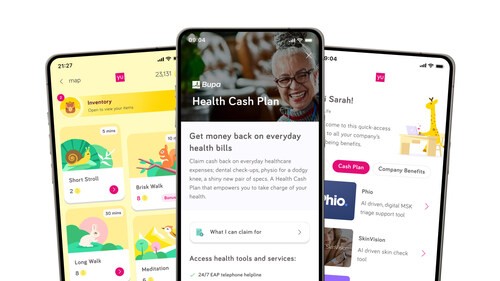
Bupa and YuLife launch cash plan to improve workplace health

Everywhen joins Brokerslink to boost international employee benefits for UK clients
67% of employers say they needed more notice for SSP changes – GRiD