
 Marvin Onumonu
William Stokes, CEO at Co-space, said that workers need spaces that not only look good but also feel good, with firms rethinking offices to improve energy, cut stress and create environments that actually help boost productivity.
Stokes said: “Workers are increasingly seeking spaces that don’t just look good, they need to feel good.
“As companies rethink the modern office for a new year and a new era, feng shui offers a practical, accessible way to improve energy, reduce stress and create spaces that support productivity instead of draining it.
“We’re seeing more organisations explore how environment, psychology and wellbeing intersect. Small changes can shift how people think, feel and perform, and the impact can be immediate.”
Analysis found more than a quarter of workers in the UK said they felt least productive in January, with around two million people affected by seasonal affective disorder.
In January 2025, workplace absence reached its highest level in four years at 5.1%, equal to 85 absences per 1,000 employees.
As teams returned after the festive break, many employers looked for ways to tackle the post-holiday slump.
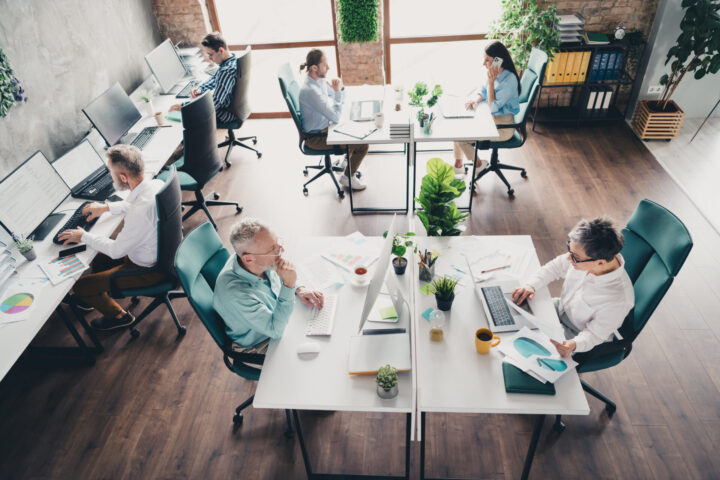
Experts said subtle changes to the work environment could improve focus and wellbeing, whether working from home or in the office.
Demand for healthier, more human-centred workplaces grew, with feng shui principles now seen alongside design trends including biophilic interiors, flexible work zones, sensory-friendly layouts and minimalist spaces.
Six simple steps were recommended to boost energy at work.
Adding plants and natural textures supported air quality and brought in the feng shui wood element, linked to growth, creativity and motivation.
Research found plants reduced stress, lifted mood and in some cases improved cognitive performance.
Stokes said: “Plants are one of the easiest ways to energise a workspace.
“They soften the environment, support wellbeing and introduce natural movement that keeps the mind stimulated.”
Repositioning desks to face the entry helped promote stability, focus and control.
Stokes added: “Your position in a room has a powerful psychological effect.
“When people feel anchored and aware of their environment, they naturally settle into deeper focus.”
A tidy space was linked to better cognitive performance and less mental load, with experts noting the benefits of clearing surfaces, organising cables and removing unnecessary items.
Stokes said: “Clutter creates visual noise that your brain must process, a tidy desk sharpens attention and sets the tone for productive work.”
Additionally Stokes noted that introducing colours such as greens, soft blues or energising accent colours was said to enhance productivity and lift mood.
He also stated that personalising workspaces with meaningful items, art or photos increased comfort and motivation.
Stokes added: “Distraction is the biggest hidden cost in most workplaces, simple boundaries and intentional layouts can transform how consistently people stay on task.”
“We’re entering a period where wellbeing isn’t a ‘nice-to-have’, it’s a business priority.
“Workplace design is evolving fast, and employees want spaces that support their mental and emotional state, not just aesthetics.”
He said: “Feng shui bridges ancient wisdom with modern environmental psychology.
“By aligning layout, colour, light and natural elements, you create environments where people feel energised, calm and ready to perform at their best.
“These human-centred design principles will define the next generation of productive, supportive workplaces.”