 Marvin Onumonu
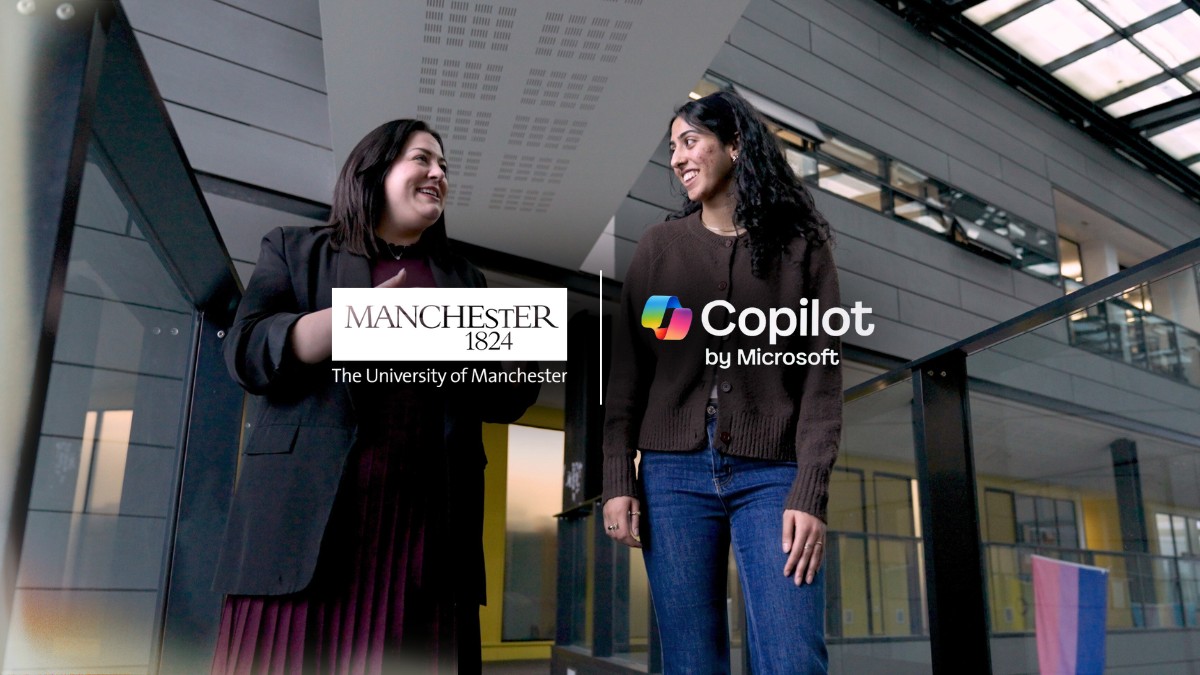
The University of Manchester will give Microsoft 365 Copilot access and training to all 65,000 students and staff as part of a new partnership with Microsoft.
The university-wide rollout is expected to be completed by summer 2026.
The aim is to equip students with workplace-ready skills, strengthen teaching and research, and address the digital divide by making advanced artificial intelligence (AI) tools available to everyone in the university community.
This agreement follows a pilot between 2024 and 2025, which showed that 90% of licensed users adopted the tool within 30 days and about half used it several times a week.
The initiative is part of the university’s digital and AI transformation programme, which focuses on building AI literacy and supporting responsible use of new technologies.
Students will be able to use Microsoft 365 Copilot in line with the university’s policies on responsible AI use.
Researchers will use Microsoft 365 Copilot to reduce time spent on routine tasks, gather evidence from a wider range of literature, and speed up data analysis.
The university reported that researchers are already using AI in areas such as breast cancer treatment, menopause care, crop productivity and waste reduction in the fashion industry.
Professional staff will use the tools for more efficient working, freeing up time for strategic tasks.
The rollout is being delivered with support from the students’ union, trade unions and staff networks.
The university is working closely with Microsoft to ensure responsible and sustainable AI adoption, taking into account environmental impacts.
Professor Duncan Ivison, president and vice-chancellor at The University of Manchester, said: “AI is now part of everyday life.
“Our responsibility is not only to make these tools available to all our students and staff on an equitable basis, but to use the depth of expertise across our university to shape how AI is developed and applied for public good.
“By embracing the AI transformation early, we are working with students, colleagues and partners to maximise the benefits and manage risks responsibly.”
Ivison added: “The great universities of the 21st century will be digitally enabled – this partnership represents a significant step on that journey for Manchester.”
Darren Hardman, CEO, Microsoft UK & Ireland, said: “As someone who grew up in Manchester, I’m proud to see the University extending access to Microsoft 365 Copilot across its entire community, helping 65,000 students and staff build the skills they’ll need to thrive in an AI‑enabled economy.
“This is a powerful example of how we can pair Manchester’s deep AI heritage with responsible, ethical adoption that helps to close the digital divide and equip people to learn, research and work more effectively.”
Professor Jenn Hallam, vice-president for teaching, learning and students at the University of Manchester, said: “Every student deserves access to the best AI tools to enable them to thrive in their studies – no matter their circumstances or background. AI is an enabler for teaching and learning, not a replacement.
“It’s not just supportive in the classroom, but in wider productivity and future life skills and we’re giving students the tools and training to use it in the right way, ethically and appropriately.
“We’re not just preparing graduates who can go out and get good jobs, we’re preparing the next generation of citizens.”
Hallam added: “That’s the mission of Manchester – you’ll get a great degree, but we’ll also prepare you for a fast-changing world.”
Minister for AI and Online Safety Kanishka Narayan, said: “When we bring a technology like AI together with the peerless expertise of UK universities, the potential is enormous.
“Whether supporting students in their studies, opening new avenues of research, or slashing the time spent on routine tasks, the benefits are transformative.
“This partnership between The University of Manchester and Microsoft will help our brightest minds do what they do best – innovate. Meanwhile, initiatives like the Department for Science, Innovation and Technology’s Spärck Scholarships will attract high-potential AI talent to top universities like Manchester.”